LP-05Loops
Figure-Eight Loop
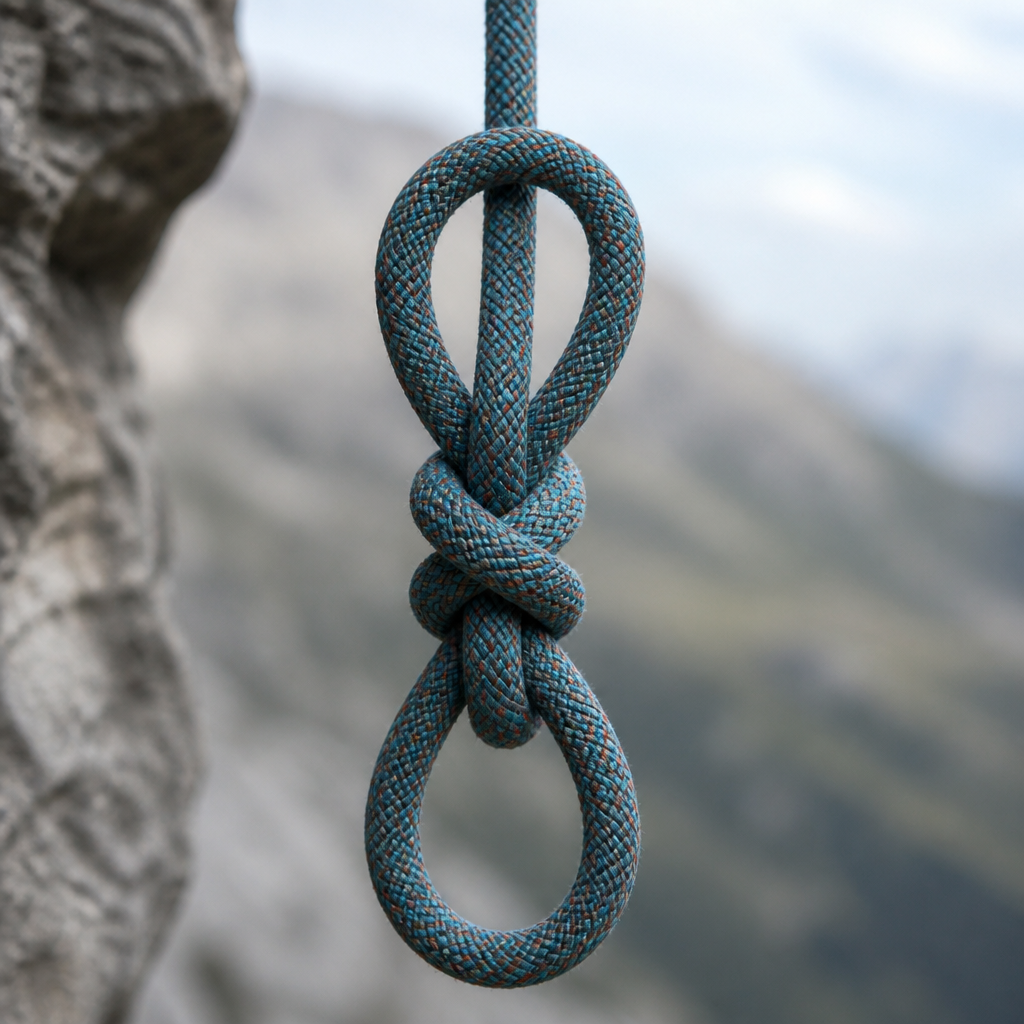
A loop knot tied by tracing a figure eight shape and following it back through with a doubled rope. It is the standard way climbers tie into a harness, largely because a correctly dressed figure eight is unmistakable at a glance.
Reviewed 22/04/2026, first documented 02/02/2026
What it is
Also called a figure eight on a bight, the knot starts as a plain figure-eight stopper knot tied loosely in the rope, using a doubled section (a bight) instead of a single strand. Once the shape is traced and left loose, the loop it produces can be sized as needed before being pulled snug. A related version, tied by following an existing figure eight back through with the rope's own working end, is the one climbers use to tie directly into a harness.
How to tie it
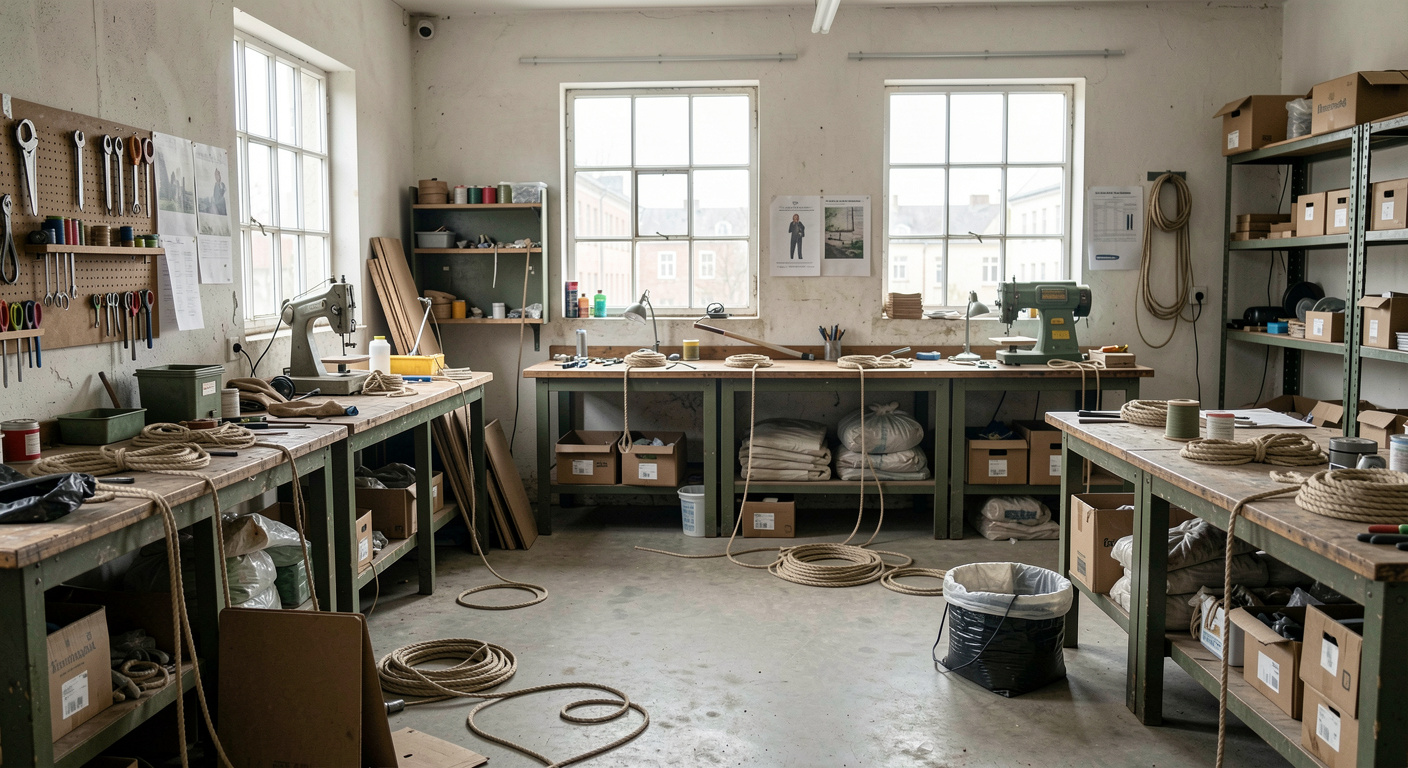
- Take a bight of rope and trace a figure-eight shape with it, crossing the rope over itself twice.
- Pass the end of the bight through the top of the figure eight to form the loop.
- Dress the knot by pulling each of the four parallel strands so none of them cross or twist over another.
- Pull the standing part and the loop firmly to seat the knot, leaving a visible, symmetrical figure-eight pattern.
Why climbers use it
Two things drive the preference over a bowline: the pattern is visually distinctive, so a partner can confirm at a glance that it is tied and dressed correctly before a climb begins, and it retains a higher share of the rope's rated strength than many loop knots, since the bends in the rope are gentler. The trade-off is that after a hard fall or heavy load, especially in wet rope, a figure eight can jam tight and take real effort to untie, which climbers accept in exchange for the visual check.
Typical uses
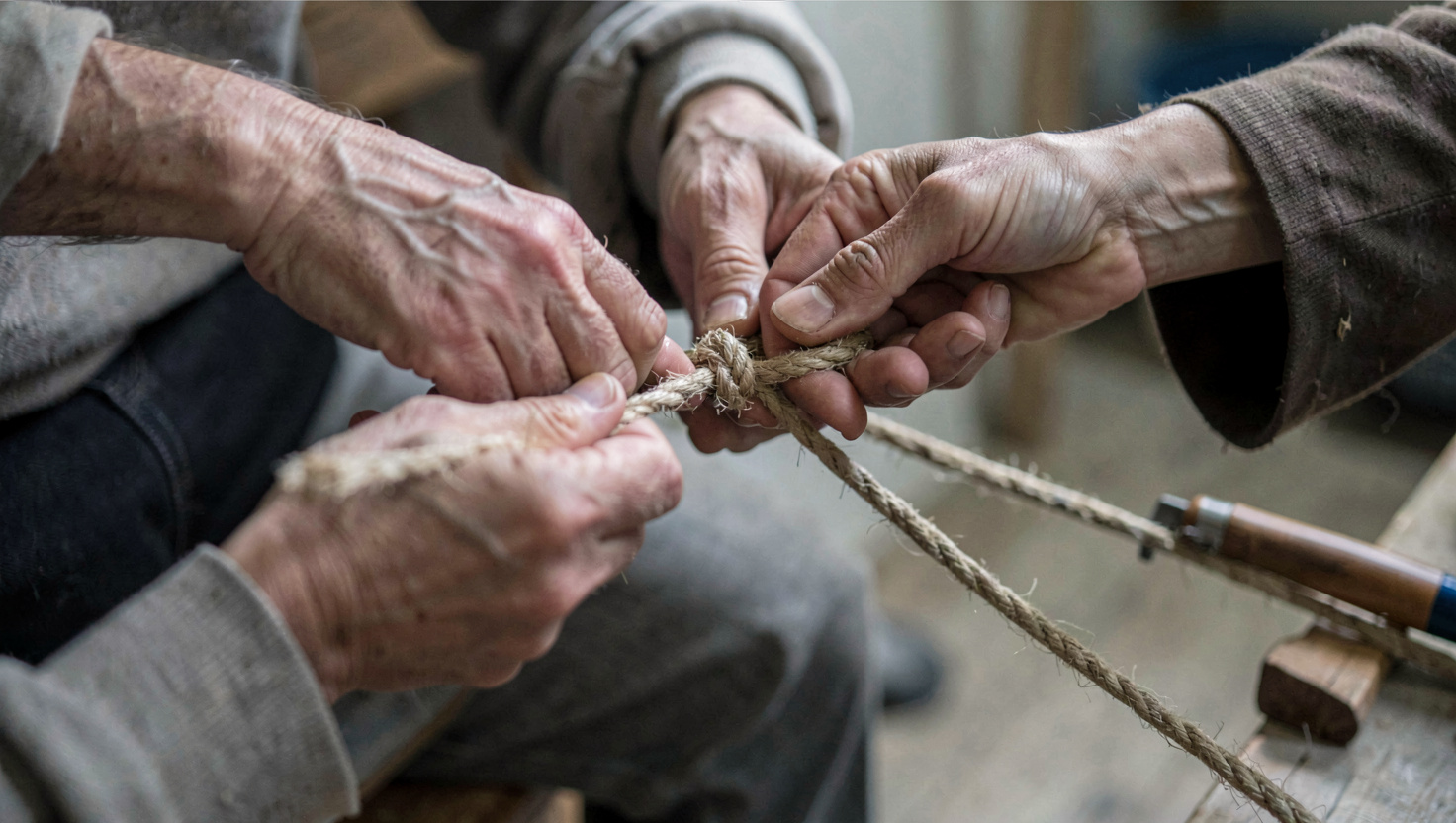
Beyond tying into a climbing harness, a single-strand version of the same knot, tied at a rope's end rather than as a loop, is used purely as a stopper knot: a bulky knot that stops the rope's end running back through a belay device or a block. The loop form is also used to clip into an anchor point, wherever a secure, easily inspected loop is needed more than an easily released one.
Compared with the bowline
The two knots are often taught side by side precisely because they solve the same problem differently.
| Knot | Easy to check by eye | Untying after a hard load | Common setting |
|---|---|---|---|
| Figure-Eight Loop | High | Can jam tight | Climbing harness tie-in |
| Bowline | Moderate | Easy | Sailing, rescue lines |
Common questions
Why does it jam after a fall?
The same tight bends that make the knot strong also let the strands bind against each other hard once a heavy, sudden load pulls them together, particularly if the rope is wet. Working it loose usually just needs patience and both hands rather than any special technique.
Is the loop and the stopper knot the same thing?
They share the same figure-eight shape, but the stopper version is tied on a single strand at a rope's end to bulk it up, while the loop version uses a doubled bight to create an eye that can be clipped or tied around a harness.