HT-04Hitches
Prusik Knot
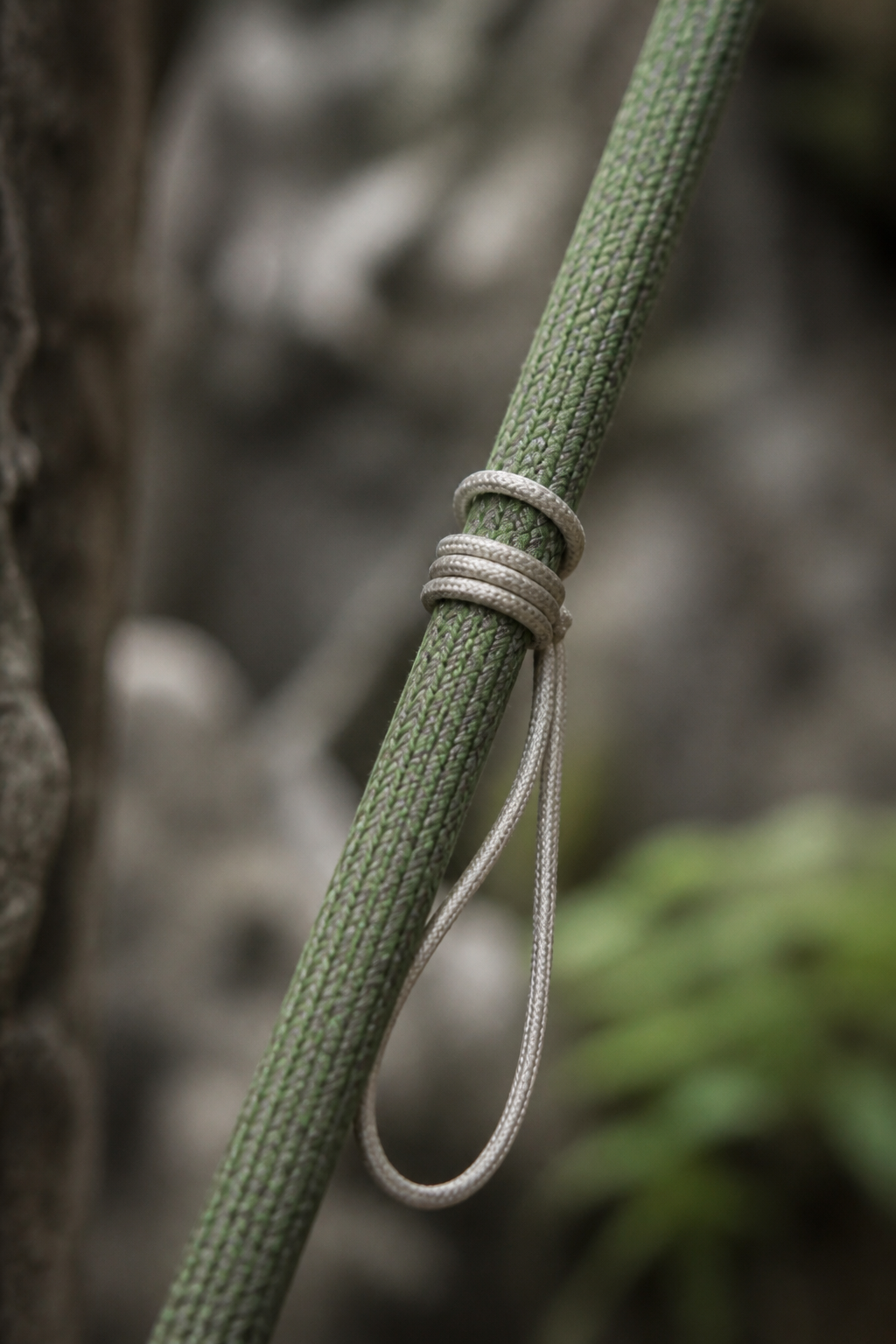
A friction hitch tied by wrapping a loop of thinner cord around a thicker rope. Loaded, it grips the rope and will not slide; unloaded, a light push slides it along freely, which is what makes it usable for climbing a fixed line hand over hand.
Reviewed 14/08/2026, first documented 03/12/2025
What it is
The prusik is named after Karl Prusik, an Austrian mountaineer who described the hitch in 1931. It is tied with a short loop of cord, usually joined into a closed loop with its own small splice or knot, wrapped several times around a separate, thicker main rope. The wraps trap the main rope between layers of the loop, and that friction is the entire mechanism: nothing about the knot relies on a permanent lock, only on the geometry of the wraps compressing under load.
How to tie it
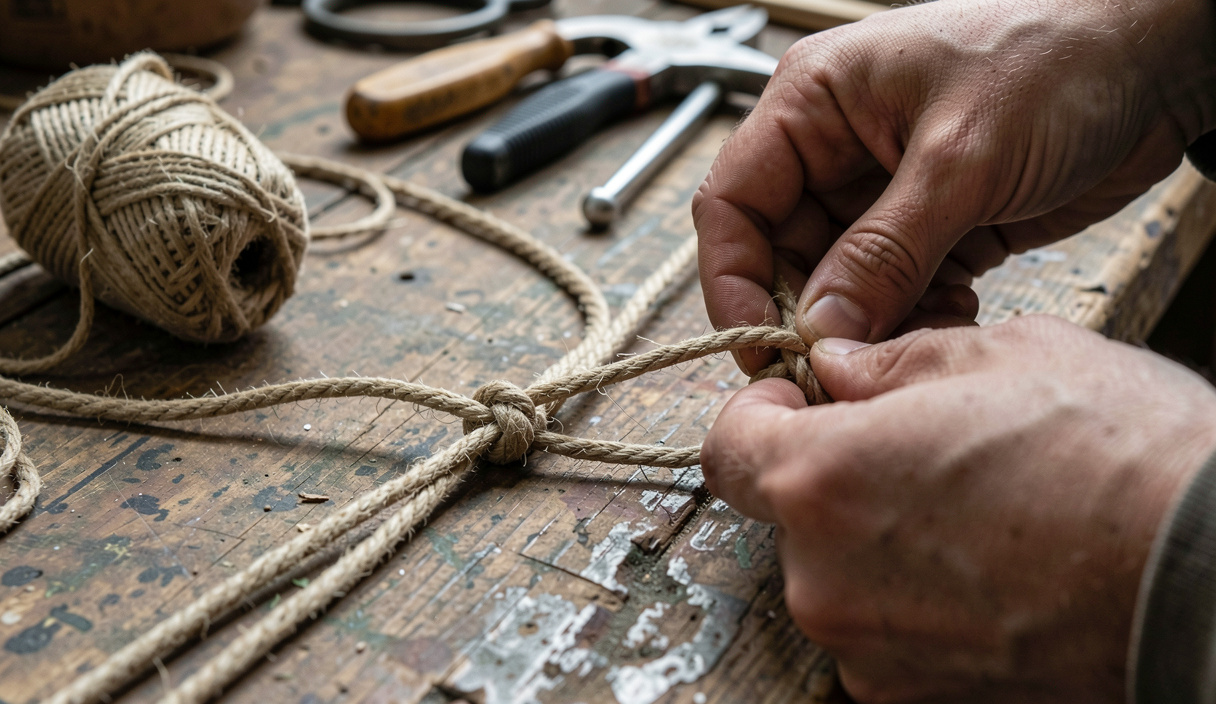
- Lay the closed cord loop behind the main rope and pass one end through the other to make a first wrap.
- Repeat the same wrap two more times, keeping every turn flat and parallel, for three wraps in total.
- Dress the wraps so they lie neatly side by side with no crossings, then pull them snug against the main rope.
- Test the grip by hand before committing weight: it should hold firm when pulled and slide when pushed with the wraps loosened slightly.
Choosing the cord
The friction only works if the loop cord is noticeably thinner and more supple than the rope it grips, typically in the range of roughly 60 to 80 percent of the main rope's diameter. A loop that is too close in diameter to the main rope will not bite properly and can slip under load; one that is too thin may grip so hard it becomes difficult to release and slide once it has been loaded and unloaded a few times.
Typical uses

In climbing and rope access work, a prusik loop is used to ascend a fixed rope hand over hand when no mechanical ascender is available, and as a backup knot on a rappel or belay device that will grip the rope automatically if the person controlling the device lets go. Rescue teams use the same principle in hauling systems, where a prusik anchored to a fixed point stops a loaded rope from sliding back while more rope is pulled through by hand.
Compared with the clove hitch
Both the prusik and the clove hitch rely on friction rather than a locked structure, but they are built for opposite jobs. The table sets out where each one is meant to be used.
| Knot | Grips | Load-bearing use | Slides when unweighted |
|---|---|---|---|
| Prusik Knot | A separate rope, by friction | Yes, common | Yes, by design |
| Clove Hitch | A post or rail | No | Not applicable |
Common questions
Can a prusik be used on any rope?
Only if the cord loop is correctly sized against that specific rope's diameter and material. A prusik that grips reliably on one rope can slip badly on a thinner or more slippery one, so it is always checked by hand before it is trusted with weight.
Why does it sometimes fail to release?
A prusik that has been heavily loaded, especially when wet, can grip hard enough that it needs to be worked loose with both hands rather than a light push. This is expected behaviour and is one reason it is practiced under supervision before it is relied on.