BN-02Bends
Sheet Bend
Joins two ropes end to end by tucking the thinner one through a bight made in the thicker one. It holds where a plain square knot slips, which is exactly the situation it was built for: two ropes that are not the same size.
Reviewed 18/02/2026, first documented 07/01/2026
What it is
The sheet bend is built around a single bight, a folded loop, made in the thicker of the two ropes. The thinner rope's working end is passed up through that bight, wraps around both legs of it, and is then tucked back under itself. The result shares its underlying structure with the bowline, which is essentially a sheet bend tied around the rope's own standing part instead of a second rope.
How to tie it
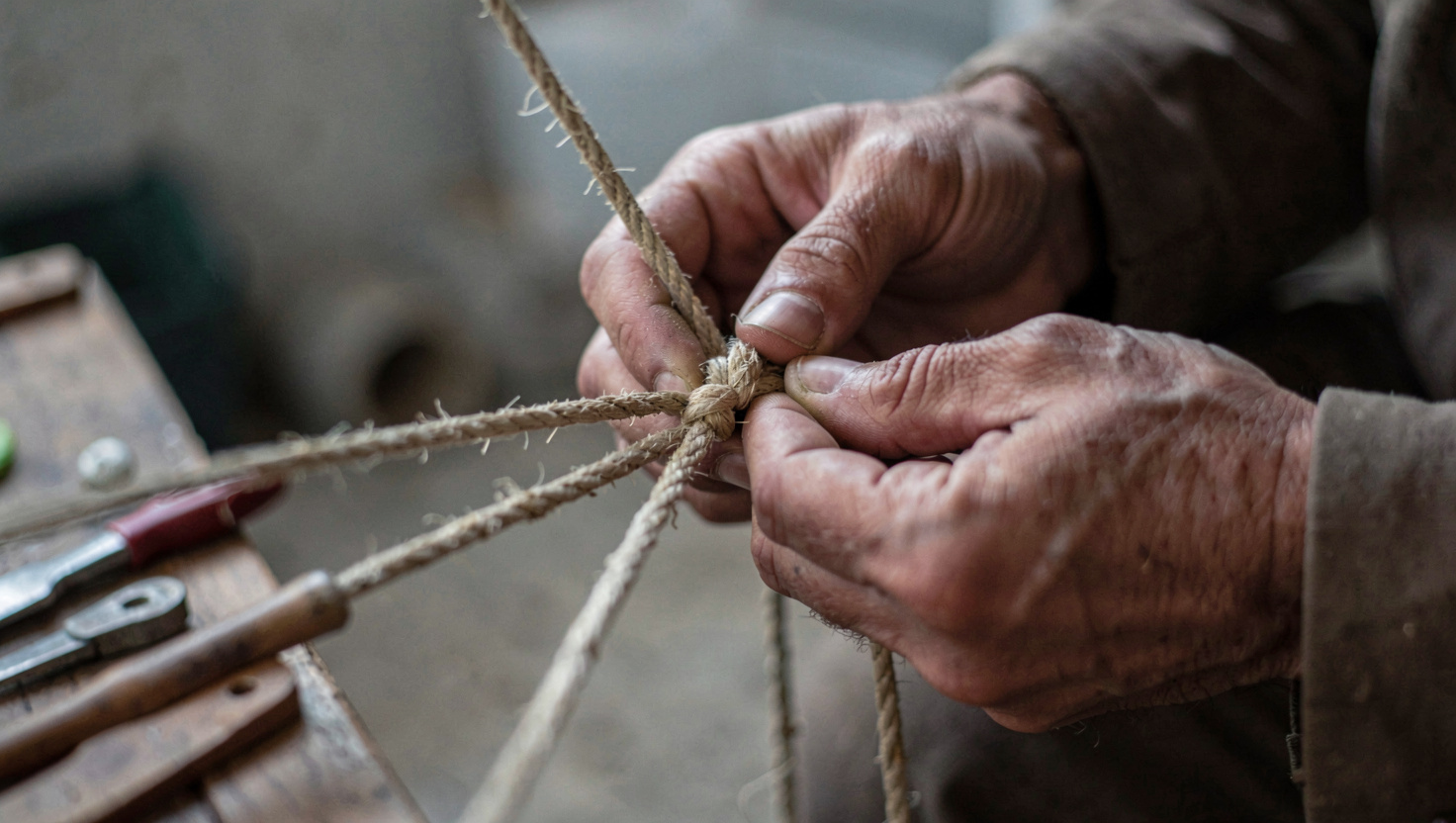
- Form a bight in the thicker rope, so its working end and standing part lie side by side.
- Pass the thinner rope's working end up through the bight, from underneath.
- Wrap the thinner rope around both legs of the bight, going behind them.
- Tuck the thinner rope's working end back under itself, then pull all four parts to seat the knot snugly.

Strength and security
A sheet bend tied and dressed correctly holds well for the moderate, steady loads it is normally used for. It is less secure than a bend with an extra locking tuck when the rope is stiff, slippery, or the difference in diameter between the two ropes is large. For those situations, a second tuck of the thinner rope around the bight, known as a double sheet bend, adds meaningful security at the cost of a few extra seconds to tie.
Typical uses
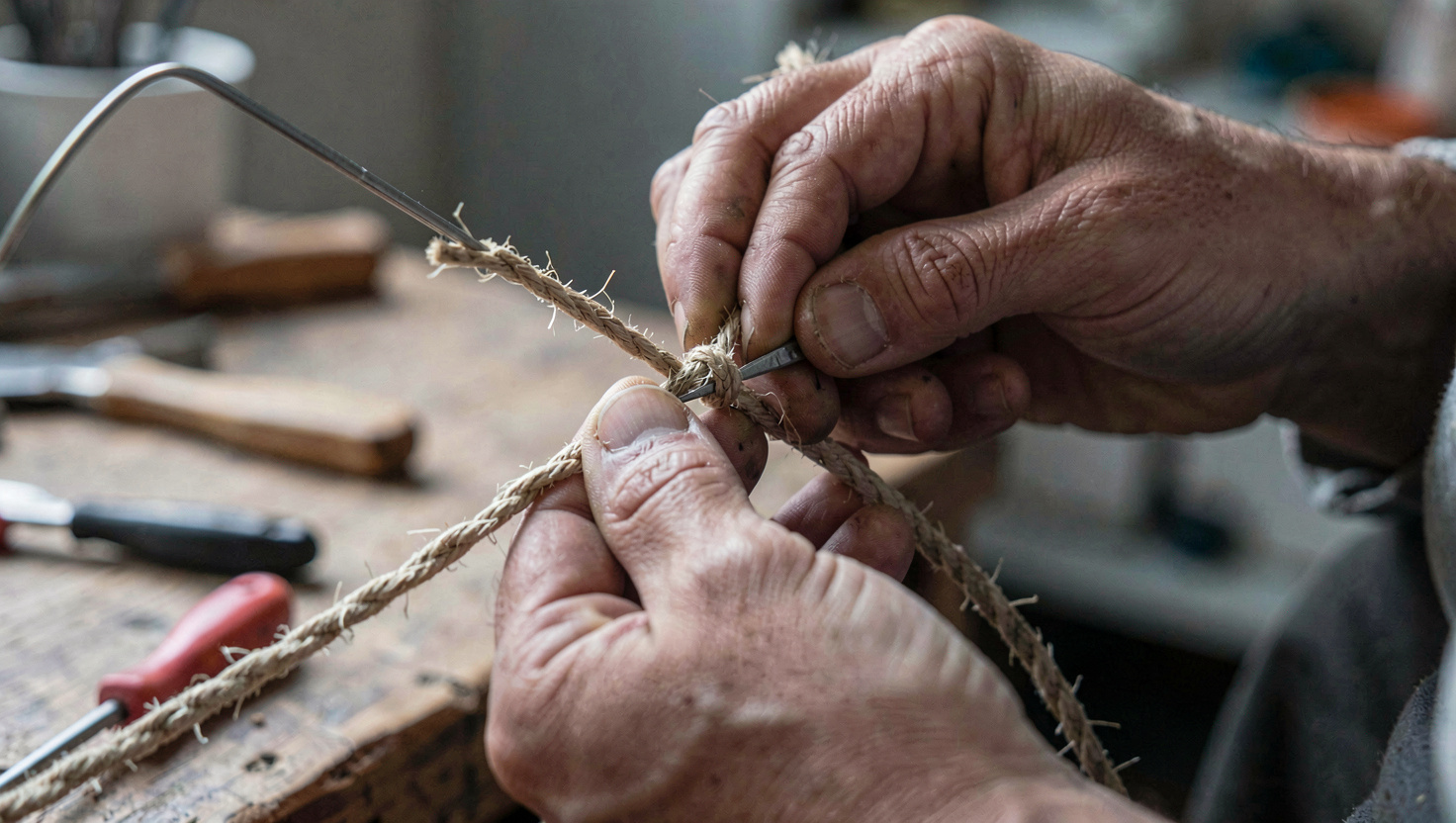
Sailors use it to join two lines of different diameter, such as extending a mooring line with a shorter length of spare rope. Its close cousin, the weaver's knot, uses the same structure to join two strands of thread or twine and is a standard join in hand weaving and netting repair, which points to how old and widely independent the underlying idea is.
Compared with the bowline
Because a sheet bend and a bowline share a structure, comparing them shows what changes when one rope becomes two.
| Knot | Joins | Typical job | Untying after load |
|---|---|---|---|
| Sheet Bend | Two separate ropes | Extending a line | Moderate, may need working |
| Bowline | A rope to itself | A fixed end loop | Easy, by hand |
Common questions
Does the sheet bend work on very slippery rope?
Not reliably on its own. Modern low-friction synthetic ropes can let a single sheet bend slip or capsize under load, which is why a double sheet bend, with its extra tuck, is the safer default on that kind of line.
Which rope should form the bight?
The thicker or stiffer of the two ropes. It holds its shape better while the thinner rope is wrapped and tucked around it, which makes the knot easier to dress correctly on the first attempt.