FN-13Field notes
Knot, hitch, bend or loop: what each term means
A hitch ties a rope to something, a bend ties two ropes together, a loop knot holds a fixed eye in a single rope, and a binding cinches tight around whatever it encloses. In everyday speech all four are knots; only in Ashley's narrower, second sense of the word does "knot" stop at the edge of hitches and bends.
Reviewed 20/10/2026, first documented 20/10/2026
The name tells you what the rope is connected to, not how the finished knot looks. Every term on this page answers to that one test, which is also the one this directory uses to file each entry into its four categories.
Is a hitch a knot?
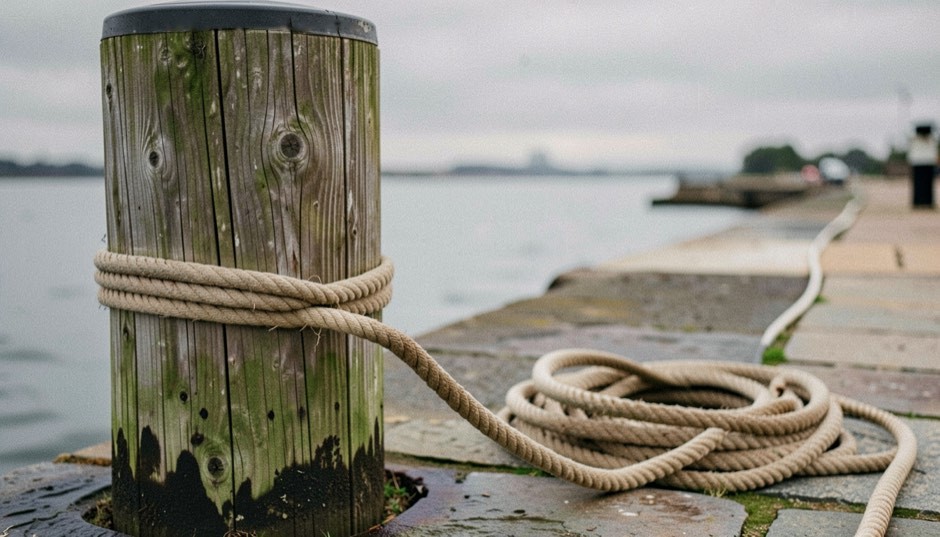
Yes, in the sense most people give the word. A hitch is a knot that attaches a rope to an object such as a ring, a rail, a spar or a post, or to another rope. The clove hitch around a post or rail and the Prusik wrapped around a climbing rope are both hitches, and both are knots in ordinary speech.
The confusion comes from the reference books. Clifford Ashley, whose 1944 compilation The Ashley Book of Knots runs to 3,857 numbered entries, gave the word knot three senses. In the broadest, it covers every deliberate complication in cordage and leaves out only accidental tangles. In a narrower sense, it excludes bends, hitches, splices and sinnets, the braided cords. In the narrowest, it means only a knob tied in a rope to stop it running out through a hole, what is now called a stopper knot. So the question has two honest answers: a hitch is a knot in general use, and it is not a knot in Ashley's second sense.
A hitch has one practical trait that sets it apart: it usually depends on the object it is tied around. Slide a clove hitch off the end of its post and pull both ends, and it falls apart into straight rope; lift a bowline off the same post and its eye stays intact. So a hitch is judged by how it grips the object, and a loop knot by how well it keeps its shape.
What does bend mean in rope work?
A bend is a knot that joins two lengths of rope, end to end. The sheet bend, which joins ropes of different thickness, is the textbook example: the thinner line passes through a bight in the thicker one and locks around it, in a structure it shares with the bowline. A bend is judged on whether it holds when the two ropes differ in diameter, stiffness or material, which is where most joining knots begin to slip.
The word is older than the definition. In earlier seagoing usage, to bend simply meant to tie a rope to something, which is why a few traditional names do not match the modern category. The anchor bend, used to make a rope fast to the ring of an anchor, is a hitch by today's standard: it ties one rope to an object, not two ropes together. When a knot's name and its job disagree, the job decides where it belongs.
Sailing vocabulary also explains the first half of the name sheet bend. On a sailing boat, a sheet is a line, whether rope, cable or chain, used to control the movable lower corner of a sail, called the clew. Sheet ropes are working lines named for that job rather than a kind of rope, and the knot that carries their name appears in David Steel's rigging and seamanship manual of 1794.
What is a loop of rope called?
It depends on the shape, and knot tyers keep separate words for each one. The definitions below follow the terms collected in the encyclopedic list of knot terminology, which draws on Ashley for bight, loop and standing end.
- Bight: a slack part of the rope between its two ends, usually bent into a curve, whose sides do not cross. A knot that can be tied without reaching either end is said to be tied in the bight.
- Loop: the curve closed until the rope crosses over itself. When the two legs are brought close but neither touch nor cross, some books call it an open loop.
- Turn: one pass of rope around an object such as a pin, a cleat or a post. A round turn takes the rope fully around and back alongside itself, which adds friction against the object.
- Eye: the fixed opening left by a loop knot or a splice. It does not slip, which is what separates it from a noose.
- Noose: any sliding loop that tightens when it is pulled.
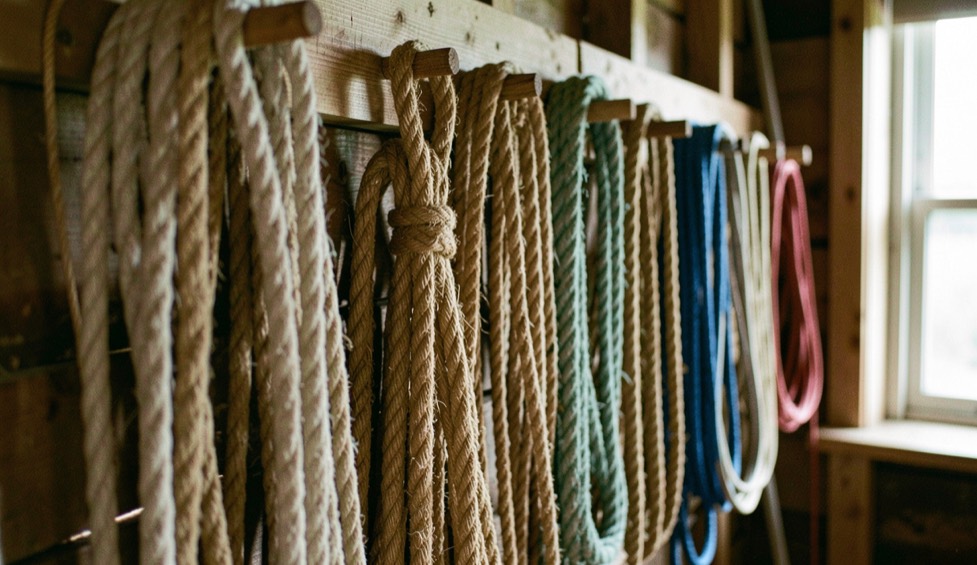
A loop knot turns a loop into a fixed eye that keeps its size under load, whether or not it is around anything. The bowline, a fixed end loop that unties easily, and the figure-eight loop are the two loop knots documented here; a noose or a slip knot, by contrast, closes down as soon as it is loaded.
Two more terms appear in nearly every tying instruction: the working end, the part of the rope that moves while the knot is made, and the standing part, the length that stays idle.
Where do bindings, stoppers and splices fit?
Binding knots either constrict a single object or hold two objects snugly together. The constrictor knot, tied around a bundle or a cut rope end, is the example in this directory, and it grips so hard that it is usually cut off rather than untied. A binding differs from a hitch in its job more than its shape: the constrictor is built much like a clove hitch, with one extra tuck that locks it.
A stopper knot is tied to stop a rope running out through a hole, a block or a grommet. It is Ashley's narrowest sense of the word, the knob in the rope, and the one family this directory does not yet file as a category of its own.
A splice is not a knot in Ashley's second sense. It joins or ends a rope by untwisting the strands and weaving them back into one another, so it changes the rope itself instead of tying it.
The terms side by side
The table sorts the terms by what the rope ends up connected to, with an entry from this site for each.
| Term | What it connects | Ropes involved | Example here |
|---|---|---|---|
| Hitch | A rope to an object, or to another rope | One, plus the object | Clove hitch, Prusik knot |
| Bend | Two rope ends to each other | Two | Sheet bend |
| Loop knot | A rope to itself, leaving a fixed eye | One | Bowline, Figure-eight loop |
| Binding | A rope tightly around an object or bundle | One, plus the object | Constrictor knot |
| Stopper | Nothing: it forms a knob in the rope | One | Not yet documented |
| Splice | Strands rewoven rather than tied | One or two | Outside the scope of tied knots |
How do you tell which one you need?
Start with what the rope has to hold on to. If the answer is a post, a ring, a rail or another rope that stays in place, you are choosing a hitch. If it is a second rope you need to add on, you are choosing a bend. If you need a fixed eye to drop over something or clip into, you need a loop knot. If something has to be squeezed and stay squeezed, you need a binding.
The label then tells you what to check. A hitch is checked against a load that changes direction, where it walks loose, as the clove hitch does. A bend is checked against the mismatch between its two ropes. A loop knot is checked by eye before it takes weight, which is why climbers tie in with the figure-eight loop, whose dressed shape is easy to inspect. A binding is checked for how it will come off afterwards.
A name is not a safety rating. A knot that will carry a person, in climbing, rescue or rope access, should be learned from a qualified instructor and checked against the guidance for the equipment in use, whatever its category.
Common questions
Is a bowline a hitch or a loop?
A loop. The bowline forms a fixed eye in a single rope and keeps that eye when it is lifted off whatever it was tied around, which is the test for a loop knot. It is often tied around a post or through a ring, which is why it gets mistaken for a hitch.
Is a Prusik a hitch or a loop?
A hitch. The Prusik is tied with a closed loop of thin cord, but the knot itself grips a second, thicker rope by friction, and that attachment to another rope is what makes it a hitch. This directory files it under Hitches for that reason.
What is the difference between a bend and a splice?
Both can join two ropes. A bend is tied with the ropes as they are and can usually be untied afterwards. A splice unlays the strands and weaves them into one another, which changes the rope itself and is normally meant to stay.